
An approach to service
When I was three years old, I asked my uncle, a trade union leader in my hometown, whether I could help him paint the hammer and sickle onto the red flags arranged in a long line across the roof of our house. My joint family of political leaders and trade unionists taught me to believe in social change and to work for it. My father taught me the value of activism and the intersections between the academy and the politics of change. The poverty and the struggles of my people taught me that intellectual exchange is incomplete until it engages the real struggles of real people. My scholarship, to me, is very real, and service is what keeps it grounded in that reality.
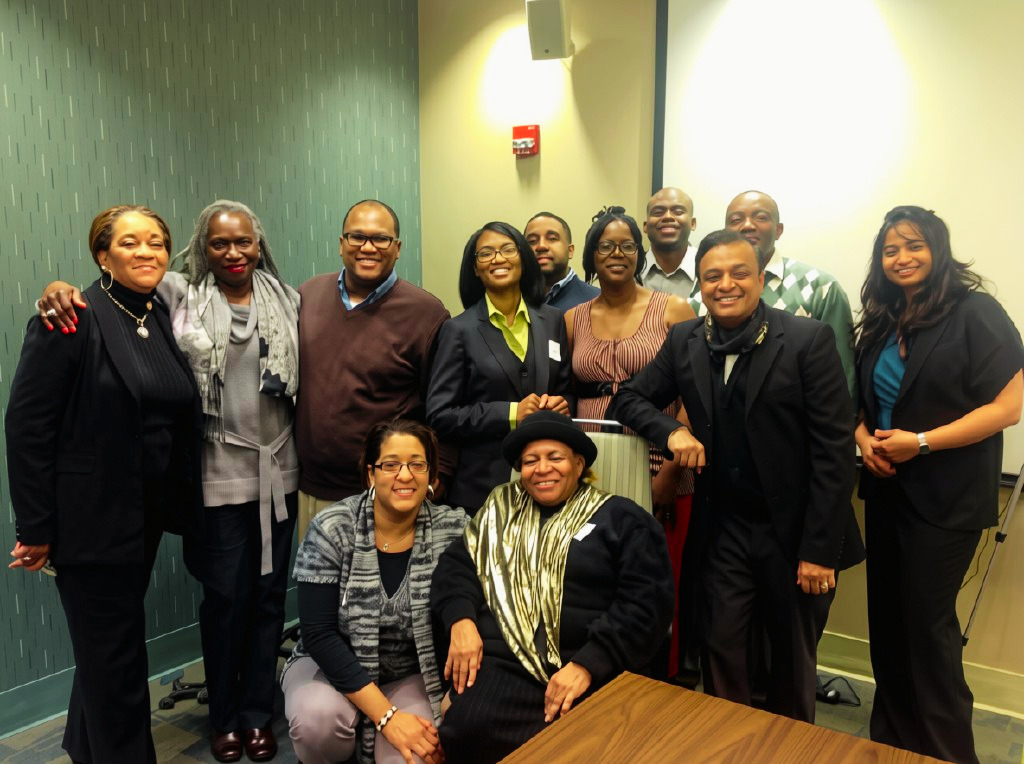
I do not understand service as something added on after the research is done. For me it is the fountainhead of the scholarship rather than a supplement to it.
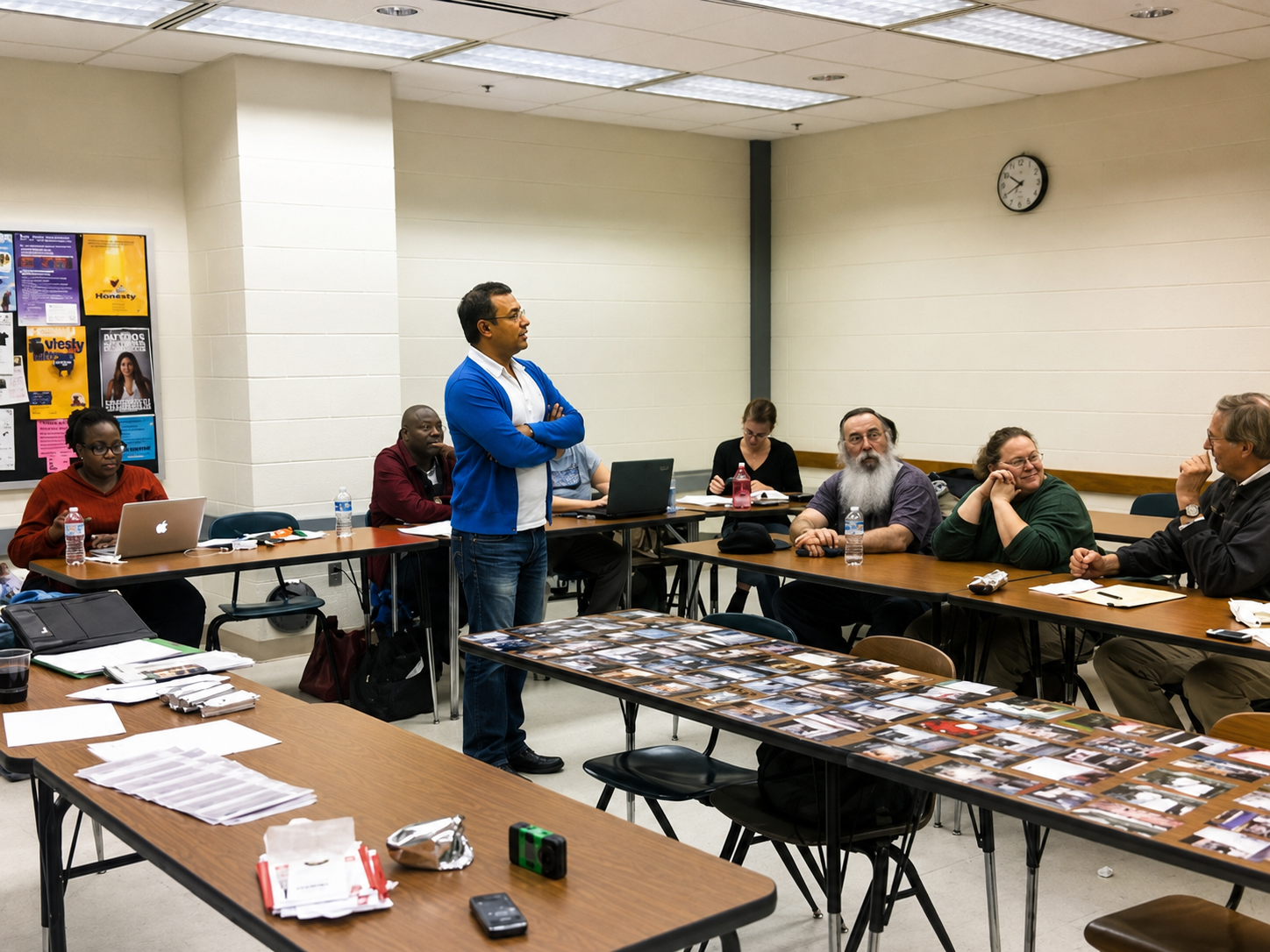
The culture-centered approach holds that lasting change begins when communities at the margins build their own voice infrastructures and contest the structures that erase them, and service is the practice of standing beside those communities while they do it.
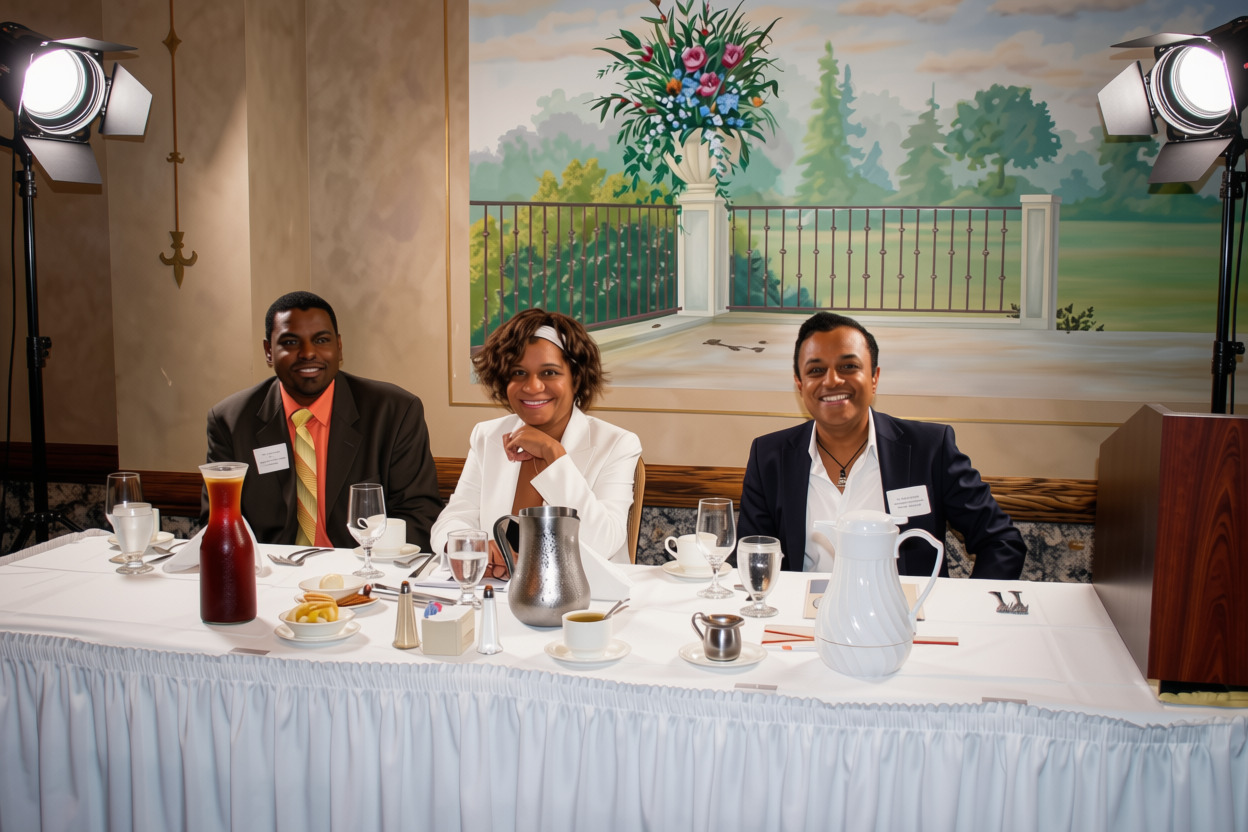
To serve, in this framing, is to organise alongside people in struggle, to put the resources and protections of the academy at their disposal, and to refuse the comfortable distance that lets scholarship observe inequality without confronting it. Positive social change is the heart and soul of what I do.
Standing beside community
Across more than fifty community sites in seventeen countries, my service has taken the form of long-term, community-led organising. In Aotearoa New Zealand I serve as Lead Designer and Facilitator of the Highbury Advisory Roopu in Palmerston North, and I have designed and led community-led violence-prevention work with ethnic migrant women, with the Wellington Rainbow Collective, and with Muslim and refugee communities, building leadership and voice from inside these communities rather than imposing it from outside.
Working alongside communities often turns toward the fundamental question, How can research and academic relationships with communities be anchored in accountabilty to communities we work with?
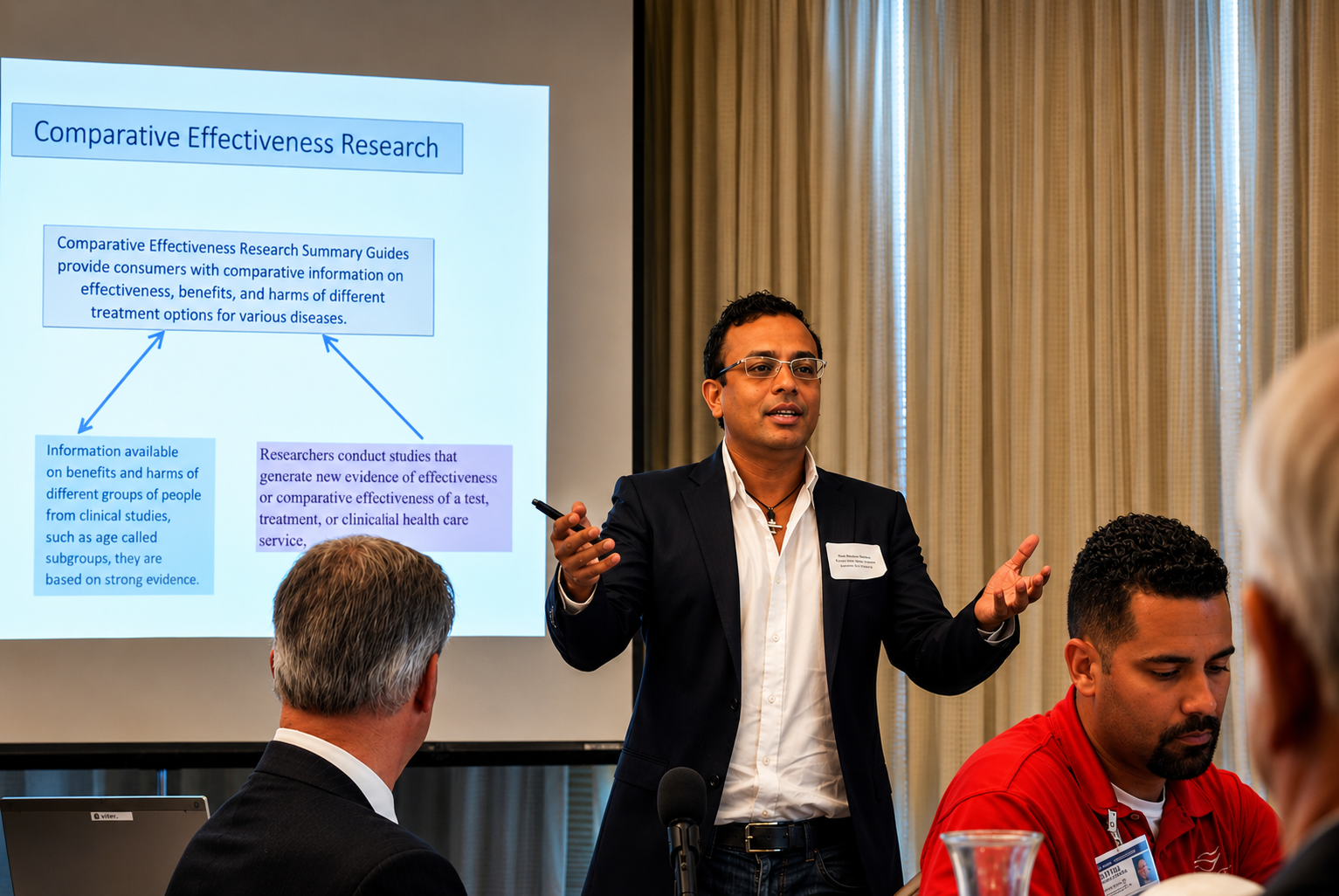
The “Poverty is not our future” campaign in Glen Innes organised residents to author their own advocacy against the structures displacing them.
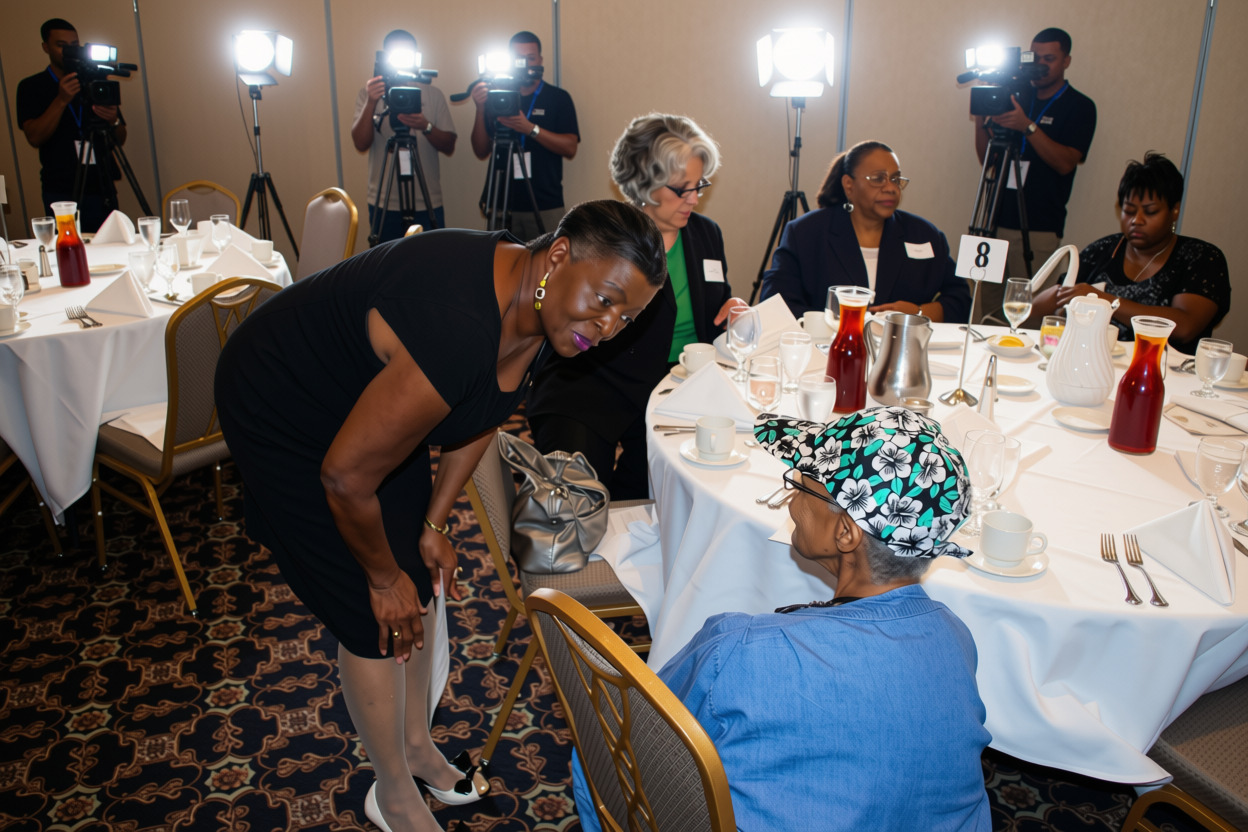
This work runs across the places that have formed me. In the inner city US, in Indianapolis and in Gary, African American struggles for health and dignity shaped the co-creation of “Communities and Universities Addressing Health Disparities” in partnership with the Indiana Minority Health Coalition, and through support of the Black caucus.
Amidst the financial crisis, my work with food insecurity, working alongside students in undergraduate and graduate service learning courses, shaped critical understanding of the capacities of working class, hyper-precarious communities to organise for their rights.
In Singapore I built community advisory structures with low-wage migrant construction workers through the Migrant Rights Campaign, and I designed the Stiletto Project alongside transgender sex workers.
Co-creation with the survivors of the Indonesian genocide generated the Learning65 campaign, building sites of articulation against the everyday practices of erasure perpetuated by the state.
In West Bengal I have given leadership to community-led Adivasi frameworks for building peace in Jangalmahal, and I have worked for years in the Santali areas around Kharagpur on theatre for social change and adult literacy, serving as creative director on productions that put socially relevant struggle on the street.
During the pandemic I helped organise community solidarities for Mutual Aid across India, New Zealand, and Singapore. The constant across all of it is community ownership: the communities are the authors of the change, and my role is to organise the infrastructure that lets their voice carry.
Policy and advocacy
I bring this same orientation into policy spaces, where I work to move community voice into the structures that govern people’s lives. I served as External Advisor and as Lead Facilitator of the Tauiwi Caucus for the National Anti-Racism Action Plan with the Ministry of Justice in Aotearoa, work grounded in honouring te Tiriti o Waitangi and building tauiwi solidarities with Māori sovereignty.
CARE’s culture-centered co-construction with diverse (ethnic migrants, rainbow, disabled, and ageing) communities at the “margins of the margins” formed the infrastructure shaping national policy in Aotearoa New Zealand on community-led prevention of family and sexual violence.
Internationally I have advised the World Health Organization’s expert group on the cultural determinants of health and wellbeing, UNESCO’s Communication for Development advisory group, UNICEF’s evidence review on child mortality, and the Global Partnership on Artificial Intelligence’s data justice programme with the Alan Turing Institute. Each of these is an attempt to carry subaltern epistemologies into rooms where policy is made, and to contest the top-down models that write communities out of decisions about their own lives.
Disciplinary and editorial service
Service to the field is, for me, continuous with this politics. I served as Editor of the Journal of Applied Communication Research, I am Series Editor of the Critical Cultural Studies in Global Health Communication book series with Routledge and Specialty Chief Editor for Health Communication at Frontiers, and I sit on the editorial boards of more than thirty journals. Within our associations I chair the Ethnicity and Race in Communication Division of the International Communication Association, and I chair the National Communication Association’s Taskforce on Academic Freedom and Tenure and its Distinguished Scholar Selection Committee. I take this work as an obligation to keep the discipline’s gates open for critical, decolonial, and community-grounded scholarship, and to defend the conditions under which scholars can stand in solidarity with the communities they serve.
Critic and conscience of society
I understand the work of an academic as a duty to speak truth to power. This is a moral commitment for me, and in Aotearoa New Zealand it is also a statutory one. The Education and Training Act 2020 requires universities and their academics to accept a role as critic and conscience of society, and it protects the freedom, within the law, to question and test received wisdom, to put forward new ideas, and to state controversial or unpopular opinions. I take that responsibility literally. To give effect to the role of critic and conscience is to use the platform and the protections of the university to name the structures that produce inequality, rather than to manage discomfort by staying quiet. Globally, I participate in delivering lectures, organising, and co-creating support resources for safeguarding academic freedom.
The critic and conscience role means little if it is exercised only in the abstract. It earns its meaning when it is turned toward power on behalf of those at the margins. For me that has meant naming settler colonialism and the infrastructures of whiteness in Aotearoa, confronting Hindutva and the rise of the far right, documenting the structural violence woven through health, immigration, and education policy, and refusing the civility discourses that would domesticate dissent into silence.
Speaking truth to power is not a posture I adopt at a safe distance. It is the practice of standing beside communities in struggle and lending the authority of scholarship to their claims against the structures that marginalise them. The activist-in-residence programme that I have built with CARE first at NUS and then at Massey, co-creates a voice infrastructure for activist interventions through scholarly dialogues, workshops, and collaborative writing.
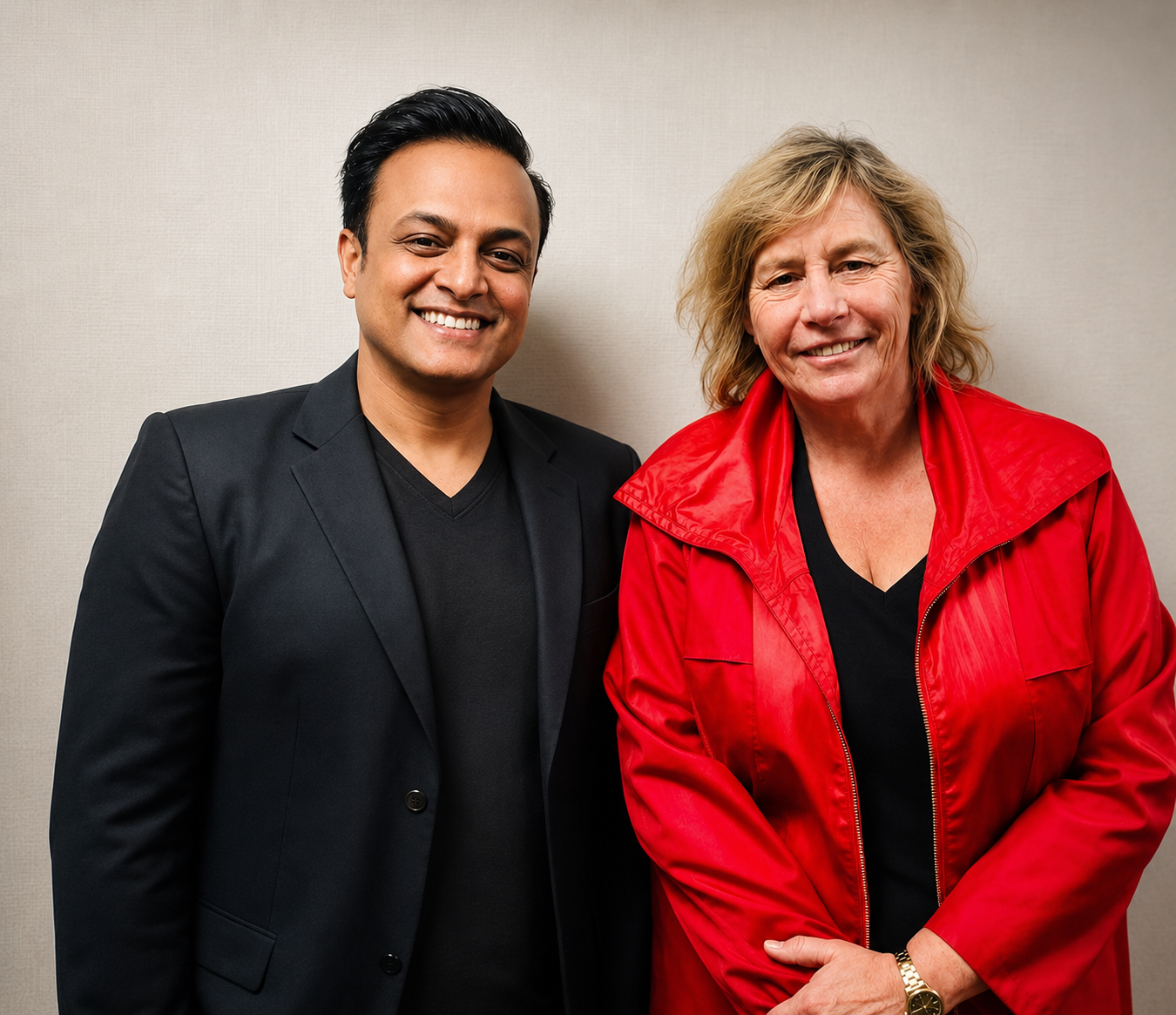
Activist interventions are critical to how we imagine and organise for social change around the critical global challenges we face in Aotearoa and as a global community.
The activist-in-residence programme renders visible the structural forces that shape the ways in which universities in the twenty first century are being organised.
This is also why I treat the defence of academic freedom as inseparable from the work of service.
The statutory role of critic and conscience cannot survive the coordinated attacks now aimed at scholars who do this work, and so I chaired the National Communication Association’s Taskforce on Academic Freedom and Tenure and regularly organise the collective solidarities that protect the conditions under which truth can be spoken to power at all.
An academy that silences its critics has abandoned its reason for being. I intend to keep giving effect to that role for as long as it is mine to hold.
Awards and recognition for engaged scholarship
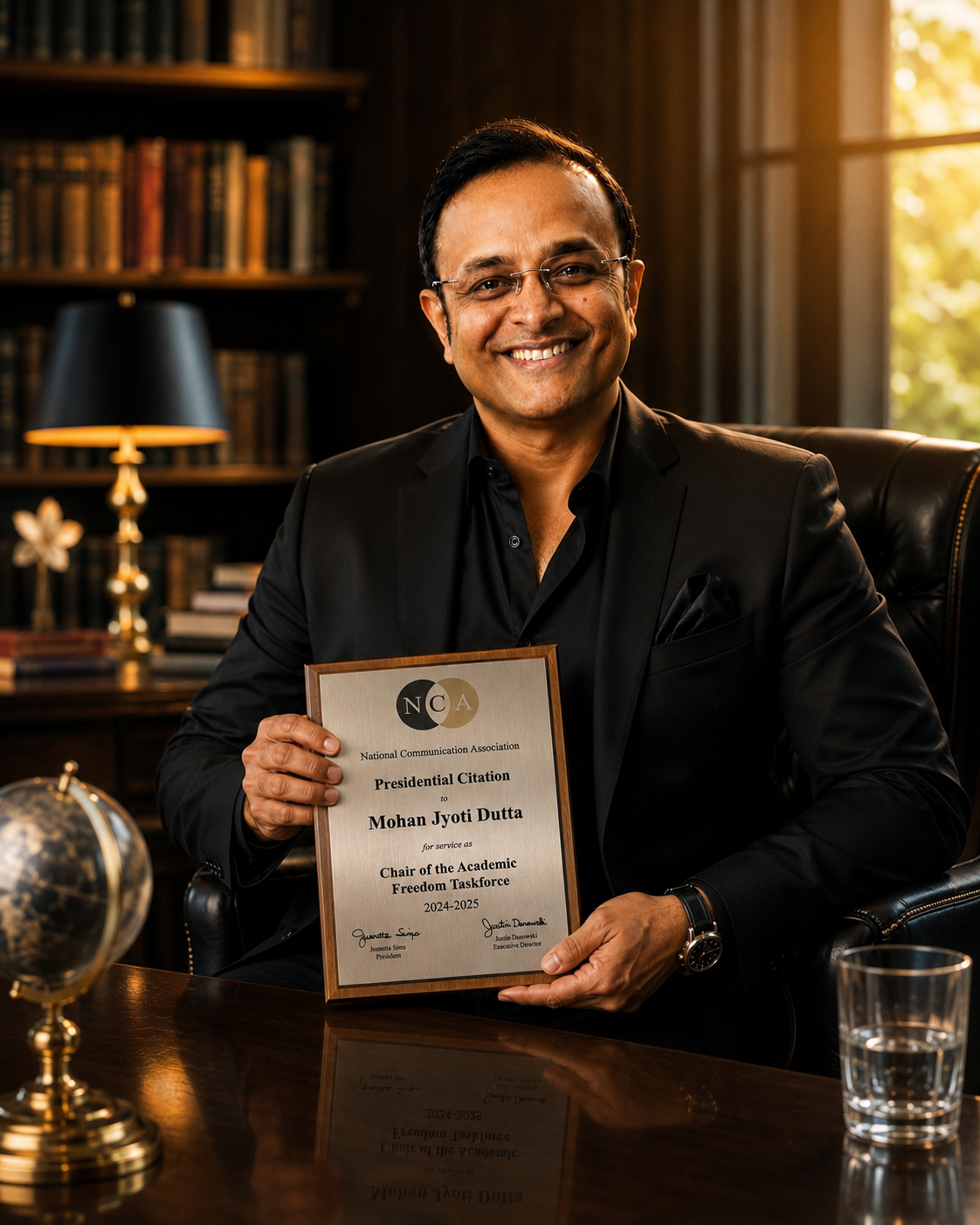
The recognition I value most is the kind that names the work of standing beside community. In 2025 I received the Lawrence R. Frey Award for Distinguished Communication and Social Justice Activism Research from the National Communication Association, an association-wide honour recognising the culture-centered approach as scholar-activist research that has been taken up across the field to intervene in unjust discourses and to deliver material benefits to communities in struggle. In 2023 the National Communication Association awarded me the Gerald M. Phillips Award for Distinguished Applied Communication Scholarship, and in 2016 the International Communication Association recognised this work with its Applied/Public Policy Communication Researcher Award. Together these honours affirm a single conviction: that scholarship earns its meaning in the organising of voice alongside the people the dominant structures work to erase.
This work has also been recognised where scholarship meets the politics of justice inside the academy itself. In 2023 I received a Presidential Citation from the National Communication Association for my contribution to the association’s commitment to diversity, equity, and inclusion. And in being asked to chair the National Communication Association’s Taskforce on Academic Freedom and Tenure, I have been entrusted with leading the discipline’s collective defence of the conditions under which scholars can stand in solidarity with marginalised communities without fear of reprisal. I hold each of these as an obligation rather than an ornament, a call to keep organising for the voice infrastructures through which communities author their own change.
A continuing commitment
In recognition of this work I was named a Purdue University Service Learning Faculty Fellow, an early marker of a commitment that has only deepened. I continue to post critical analyses on my blog and through public scholarship as a way of opening discursive spaces for debate on the social, political, and economic questions that matter, because the work of organising voice does not stop at the edge of the community meeting. It belongs in public, in struggle, beside the people whose voices the dominant structures are built to erase.